
Smart AI isn't enough. You need memory.
Most "AI assistants" are smart. They're still amnesiac.
They can write, summarize, and brainstorm—but they don't reliably remember what you promised, what you decided, what your tone is, or what matters most in your inbox unless you paste context every time. That's not an intelligence problem. It's a systems problem.

OmnyxAI is built around a simple belief: context is king. Omnyx is context.
OmnyxAI is a memory engine + executive assistant that turns your work history into a system you can rely on. Connect Gmail, Calendar, Docs (and your tools). Omnyx builds a private, structured record of conversations, commitments, and decisions—so every answer and every draft is grounded in what you've already said and done.
Here are the core principles behind building an assistant that doesn't just sound smart—but behaves reliably.
1) Build Memory Before Magic
Most assistants start with generation. "What can we write?" "What can we automate?" But without memory, generation is theater.
A real assistant needs durable context:
- What was agreed to in the last thread
- What follow-ups are pending
- Who this person is and what matters to them
- How you normally respond
- What documents define your policies and preferences
Omnyx starts with a memory engine that turns your real work artifacts into structured, searchable knowledge: emails, meetings, documents, and decisions. The goal isn't to store everything—it's to store the pieces that prevent dropped balls and repeated explanations.
The result: you stop re-teaching the assistant. The assistant starts remembering you.
2) Ground Every Output in Evidence
"Trust me" answers are the fastest way to lose trust.
When an assistant claims something—what you promised, what you decided, what a doc says—it should be able to point back to the source that justifies it. Not vibes. Not guesses.
Omnyx is built to answer with receipts:
- Pull the relevant email line, meeting note, or doc section
- Show the sources it used
- Draft the next action based on that context
This changes the entire relationship. You're no longer reviewing an AI's confidence. You're reviewing your own history, cleanly surfaced.
3) Prefer Approval-First Automation (Then Earn Autopilot)
Autopilot sounds great until it sends the wrong message to the wrong person.
In practice, good automation is staged:
- Draft and propose
- Show why
- Ask for approval
- Learn your preferences
- Graduate low-risk workflows to autopilot (with rules)
Omnyx is designed around approvals-first execution. You stay in control, especially when:
- Money is involved
- Commitments are being made
- Reputational risk exists
- Scheduling affects multiple people
Then, once you trust it, you can turn on autopilot selectively (not globally) with clear policies. The assistant should adapt to your risk tolerance, not force you into one mode.
4) Optimize for Workflows, Not Features
The assistant experience isn't "a chat box." It's the loop of:
- Incoming message
- Context retrieval
- Suggested action
- Follow-through
- Reminders when someone doesn't respond
- Closing the loop with the next step
That's why Omnyx focuses on high-frequency workflows that quietly consume your week:
- Inbox triage that surfaces what truly needs you
- Replies drafted in your tone using real context
- Meeting prep with decisions and prior threads
- Follow-ups that don't fall through the cracks
- Commitments tracking ("what did I promise and to whom?")
The win is not "AI wrote a paragraph." The win is "this didn't become another thing I have to manage."
5) Make Personalization a System, Not a Prompt
Most "personalization" today is a few lines in a custom prompt: "Be concise. Sound professional. Be friendly."
That's not personalization. That's style.
Real personalization comes from:
- Your past decisions
- Your preferences (explicit + implicit)
- The way you handle specific situations
- The language you use with different stakeholders
- The docs that define your playbook
Omnyx uses memory to shape outputs so your assistant doesn't just "write well." It writes like you, with the right background, and without you re-explaining the world every time.
6) Privacy and Deletion Must Be Core, Not a Footnote
If your assistant has access to your email, calendar, and documents, trust isn't optional. It's the product.
A serious assistant needs:
- Private-by-default behavior
- Clear control over what is connected
- Transparent access boundaries
- Full deletion control over documents and memories
Omnyx is designed so users can control what gets stored, what gets used, and what gets deleted—because long-term memory is only valuable if it's also safe.
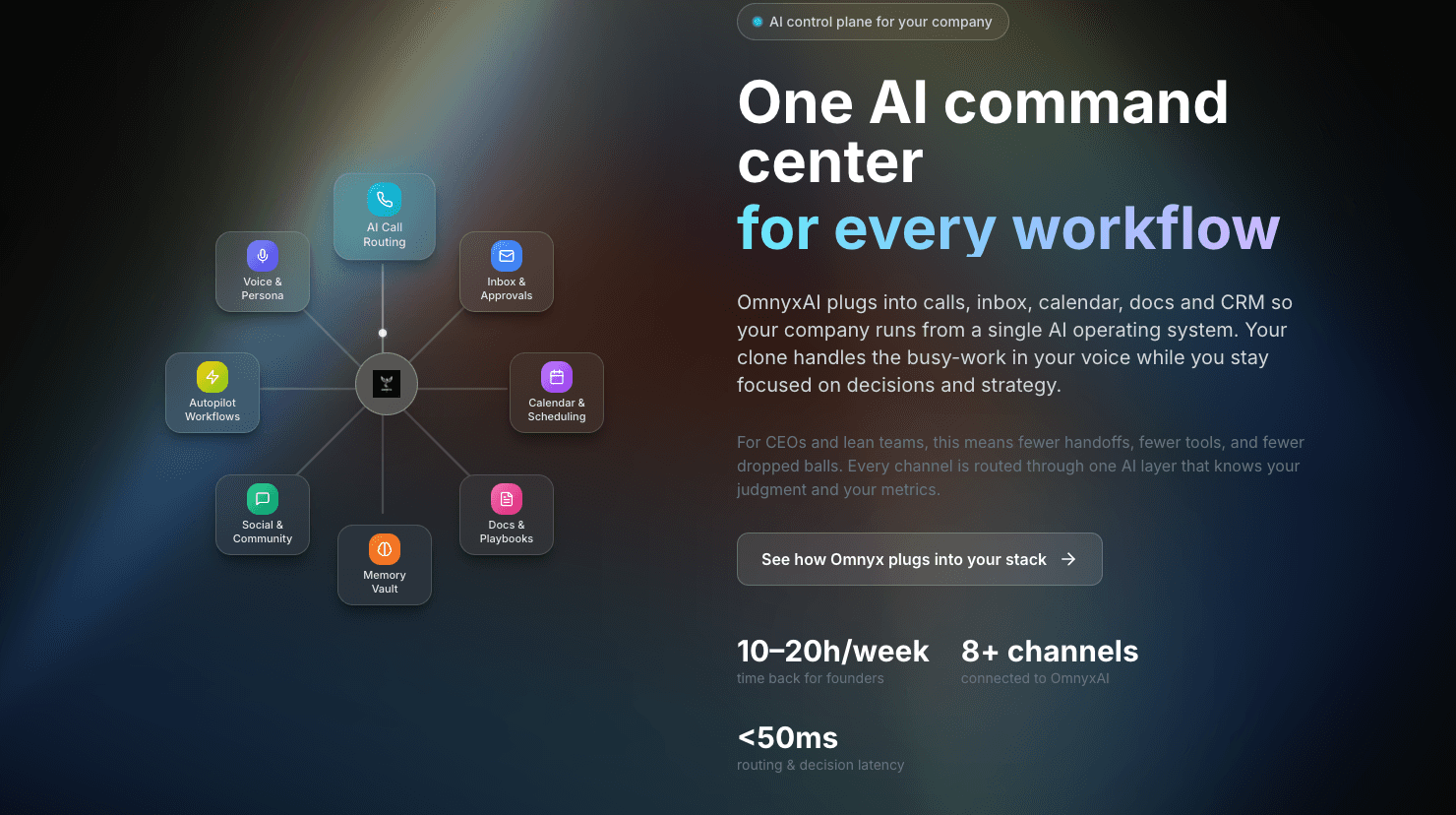
What This Looks Like in Practice
A typical "Omnyx day" looks like this:
You open your unified inbox. Omnyx highlights what truly needs you (not what's merely noisy). For each important thread, it proposes a reply and shows the context behind it: the relevant prior email, the last decision, the linked document, the promised date. You approve, edit, or override in one click.
Before a meeting, Omnyx prepares you with:
- Who you're meeting
- What was last discussed
- Open action items
- Suggested follow-ups
After the meeting, Omnyx turns the transcript into:
- A clean summary
- Decisions
- Action items
- Draft follow-ups
Over time, the system compounds. Your "assistant" becomes a reliable operating layer across communication—not just a text generator.
Why This Matters Now
As work moves faster, the cost of dropped context is exploding:
- Missed follow-ups become churn
- Unclear decisions become rework
- Scattered information becomes stress
- "I'll get back to you" becomes a reputation leak
Teams don't need more tools. They need fewer forgotten commitments.
If AI is going to be a real executive assistant, it needs memory, grounding, and control. That's what Omnyx is built for.